Why Willpower Fails When Biological Systems Are Ignored
Willpower is often treated as a universal solution.
When habits fail, routines collapse, or consistency fades, the explanation is usually the same: not enough discipline.
This assumption feels intuitive — but it is structurally flawed.
Human behavior does not operate in isolation from biology. Every decision, effort, and repeated action depends on underlying systems that regulate energy, stress, cognition, and recovery. When those systems are ignored, willpower is forced to compensate for constraints it was never designed to overcome.
Over time, this imbalance leads not to growth, but to exhaustion.
Willpower Is Not a System — It’s a Resource
Willpower is better understood as a short-term regulatory capacity, not a foundational system.
It helps with:
- Initiating effort
- Resisting immediate impulses
- Navigating temporary friction
But it does not:
- Generate energy
- Restore capacity
- Stabilize long-term behavior
When routines depend primarily on willpower, they remain fragile. They work best on high-energy days and collapse quietly when biological capacity declines.
This is why people often report that habits “used to work” — until they didn’t.
Biological Systems Set the Ceiling for Behavior
Behavior operates within constraints imposed by biological systems, including:
- Energy availability (metabolic, hormonal, neurological)
- Stress regulation (cortisol dynamics, recovery load)
- Cognitive bandwidth (attention, decision fatigue)
- Sleep and circadian rhythms
- Age-related physiological shifts
Energy is not evenly distributed across days, life stages, or physiological states. When capacity drops, behavior does not fail — systems do. This relationship between energy availability and consistency is explored further in Why Modern Men Feel Chronically Low on Energy — And Why Discipline Isn’t the Problem.
These systems fluctuate daily and seasonally. They also change across life stages.
Ignoring this variability leads to a false expectation: that output should remain constant even when capacity does not.
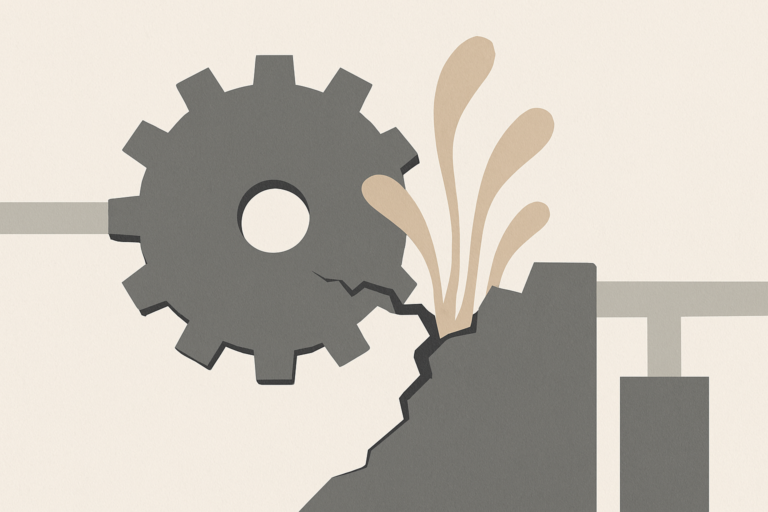
When systems are misaligned, willpower is used to bridge the gap — temporarily masking the mismatch until failure becomes unavoidable.
Why Discipline Becomes a Liability Under Low Energy
In low-capacity states, discipline often backfires.
Instead of stabilizing behavior, it:
- Increases internal friction
- Elevates stress responses
- Accelerates cognitive fatigue
- Reinforces self-blame when routines fail
What appears as “lack of commitment” is often a system demanding more than the body can supply.
This dynamic explains why many people feel chronically exhausted while believing they are “doing everything right.” The problem is not effort — it is system design.
Systems That Ignore Energy Create Fragile Habits
Rigid systems assume consistency where none exists.
They rely on:
- Fixed schedules
- Non-negotiable routines
- Uniform output expectations
In reality, energy is variable. Systems that do not adapt to this variability depend increasingly on discipline as energy declines.
When habits repeatedly collapse under these conditions, the issue is rarely a lack of commitment. More often, routines are built on assumptions that ignore fluctuating energy and biological limits — a pattern examined in Why Most Habits Fail — And How to Build Routines That Actually Stick.
Over time, this creates a predictable pattern:
- Initial success
- Rising friction
- Growing fatigue
- Behavioral collapse
- Self-attribution of failure
The system remains unquestioned. The individual absorbs the blame.
Capacity-Aware Systems Behave Differently
Systems designed around biological reality prioritize stability over intensity.
They:
- Adjust expectations based on available energy
- Reduce decision load during low-capacity periods
- Emphasize recovery as a structural component
- Separate identity from output
In these systems, willpower is used strategically — not continuously.
Consistency emerges not from force, but from alignment.
Reframing Failure: From Moral to Structural
When biological systems are ignored, failure is framed as a personal flaw.
When systems are examined objectively, failure often reveals:
- Mismatched expectations
- Unaccounted energy constraints
- Overloaded routines
- Insufficient recovery cycles
This reframing reduces self-blame and creates space for sustainable adjustment.
Understanding behavior structurally leads to better decisions — and fewer unnecessary struggles.
From Willpower to Systems Thinking
Long-term consistency does not come from trying harder.
It comes from:
- Designing systems that respect biological limits
- Treating energy as a primary variable
- Allowing flexibility without abandoning structure
- Viewing discipline as a tool, not a foundation
Willpower can support systems — but it cannot replace them.
Final Perspective
Ignoring biology turns willpower into a compensatory mechanism.
Respecting biology turns systems into stabilizers.
When systems work with human capacity instead of against it, habits stop feeling fragile — and consistency stops requiring constant effort.
Progress becomes quieter, less dramatic, and far more sustainable.